Showing posts with label World Heritage Sites. Show all posts

Friday, 12 July 2013

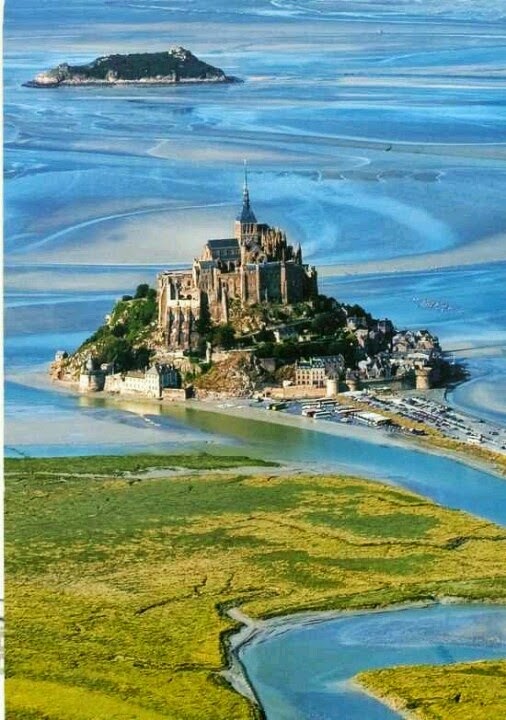
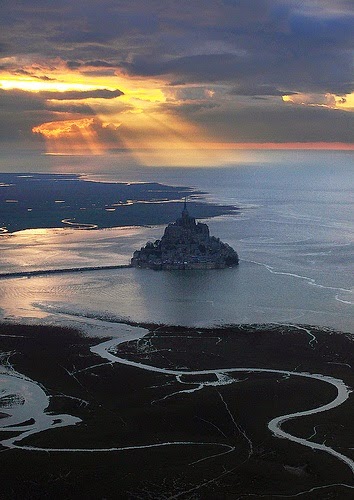
The most beautiful pictures of Mont Saint Michel, France (20 photos)

Mont Saint-Michel is an island commune in Normandy, France. It is located approximately one kilometre (just over half a mile) off the country's northwestern coast, at the mouth of the Couesnon River near Avranches. 247 acres (100 ha) in size, the island has a population of 44 (2009).

The island has held strategic fortifications since ancient times, and since the eighth century AD has been the seat of the monastery from which it draws its name. The structural composition of the town exemplifies the feudal society that constructed it. On top God, the abbey and monastery, below this the Great halls, then stores and housing, and at the bottom, outside the walls, fishermen and farmers' housing.

One of France's most recognisable landmarks, Mont Saint-Michel and its bay are part of the UNESCO list of World Heritage Sites and more than 3 million people visit it each year.

(photo source)
 
(photo source)
 
(photo source)
 
(photo source)

(photo source)
 
(photo source)
 
(photo source)
 
(photo source)
 
(photo source)
 
(photo source)
 
(photo source)
 
(photo source)
 
(photo source)

(photo source)
 
(photo source)
 
(photo source)
 
(photo source)

(photo source)

(photo source)
 
(photo source)

Thursday, 14 March 2013

Amsterdam: The City Of Canals, Red Lights And All Things Green

Amsterdam: The City Of Canals, Red Lights And All Things Green picture
Amsterdam canal during the blue hour
Before our trip there, all I knew about Amsterdam was prostitution is legal as is smoking pot! So I wasn't too sure how I would feel about this infamous Netherlands capital.

But I was pleasantly surprised to find there is so much more to this amazing city than ladies of the night and 'coffee shops' (places you go to buy and smoke weed).

Amsterdam is a city rich in history and culture. With its picturesque canals, stunning architecture and lush greenery this is one of the most beautiful cities I have been to.

Nicknamed "Venice of the North", the best way to experience this city is by boat along the canals. You see the city from a different perspective and in all its glory.

You can walk through the city very easily which is another great way to take it all in. Bike riding is also very popular there with tourists and locals alike. However there didn't seem like there was enough road for the cars and the many many bicycles so we decided to stick with using the canals and footpaths.

Of course, most visitors to Amsterdam want to take a walk through the Red Light District or visit one of the many coffee shops Amsterdam is so well known for. And we did just that.

Its quite surprising to see the 'ladies' standing in the doorways of their tiny rooms waiting for their next customer. And what's even more surprising is the smell of weed wafting out from every other shop in broad daylight. It's a very surreal situation. But something I encourage everyone to experience because there are not too many places in the world quite like this! Do not worry about safety issues; Its very safe to walk through the district and its quite common to see a family strolling through the area. Keep in mind however, you are not allowed to photograph the ladies (unless you want to see your treasured camera thrown into the canal).

A few of our favorites places...

Prinsengracht

This World Heritage Site is a picturesque body of water and is one of the three major canals that shape the city.

Prinsengracht, which translates to 'prince's canal', is filled with gorgeous houseboats and lined with cafes, galleries and boutique shops and is the liveliest of all the canals.

The Jordaan

Another great World Heritage Site in Amsterdam, the Jordaan is a charming neighborhood in Greenwich Village. With narrow alleys, picturesque canals and 17th century houses this quaint neighborhood is worth a visit.

Walk through the Jordaan and shop at the designer boutiques, have lunch at a charming café and visit the eccentric specialty shops.

Vondelpark

The city's most famous park has been around since 1850 and is a popular area for both tourists and locals alike. A great place for a casual stroll or, for those with more energy to burn, cycling and skating are very popular here.

It's the largest of Amsterdam's 30 parks and in the summer months you can struggle to find a piece of lawn for yourself.

A great place to enjoy a picnic on a beautiful sunny day.

Free City Walking Tour

I am a huge fan of free walking tours and this one did not disappoint. As you walk through the city your guide will share some of the fascinating history with the group and show you some of the best sites Amsterdam has to offer.

They offer different tours, depending on what you are most interested in, which are free (though you are expected to tip). We did the 3 hour city tour which covers a little bit of everything and gave us a great feel of the city. There are also a tour that focus on the Red Light District and a bike tour.

Tours like this are the best way to get to know a city better and to orientate yourself on arrival.


Monday, 28 January 2013

Amalfi Coast, Italy Travel Guide

The Amalfi Coast lies in the southwestern region of Campania, Italy. For its extraordinary beauty and its iconic medieval cliffside Mediterranean fishing villages, it is recognized as a UNESCO World Heritage Site.

A View of Positano
Positano looking back along the coast to Praiano. Amalfi Coast, Italy - photo by Atilla2008

Declared one of the UNESCO World Heritage Sites for its undisputed beauty and the uniqueness of its natural landscape, the Amalfi Coast is the land characterised by the oxymoronic combination between mountain and sea, the farmer and the fisherman. The mountain, that thanks to the intense work of man, has been adapted to the demands of life over the ages. It plunges steeply into a sea, creating charming coves, deep fjords, cliffs, caverns, bays, natural arches and small pebble beaches; natural elements that have created, over the centuries, an enchanting, sinuous and seductive landscape: it is certainly not a coincidence that this area is known as the land of the Sirens, in the Homer's epic poem "Odysseus". Typical houses, painted in warm pastel colors, follow the natural slope of the foothills of Mounts Lattari, leaning against each other, creating a very picturesque landscape. From the characteristic terraces, built with dry stone walls, expands the intense scents of the lemon groves, the vineyards, the broom, the bright colors of bougainvillea which, combined with the smell of salt air, creates a unique sensory experience.

Thirteen are the pearls of this land, located along a stretch of road among the most scenic in the world, ripped from the bare rock, which give the tourists strong emotions, pleasant memories and a strong desire to return as soon as possible to this little piece of heaven on earth:

- Vietri sul Mare, the gateway to the Amalfi Coast, coming from Salerno, famous throughout the world for the production of ceramics, with its intense and vivid colors, and the beautiful hill towns of Albori and Raito;
- Cetara, a small fishing village, that has become famous over the years for its fishing related products, creating culinary specialties appreciated world-wide, such as the salted anchovy sauce and red tuna, for example;
- Maiori, the ancient Reghinna Major, which, despite the wide promenade and appearance of the new town, hides a very charming old town, made up of narrow streets and alleys, dominated by the imposing castle of San Nicola de Thoro Plano, to the north, and the Collegiate Church of Santa Maria a Mare, to the west;
- Tramonti, a group of villages and districts set among the green mountains, covered with vineyards, away from the clamor of the other coastal countries, well known for its authentic flavors, the excellent wines and dairy products;
- Minori, the ancient Reghinna Minor, with the remains of the Roman Villa of the I century A.D., the magnificent Basilica of Santa Trofimena and the tasty hand-made pasta, gastronomic specialty of the town;
- Atrani, one of the smallest municipalities in Southern Italy, with its picturesque square and the ancient church of San Salvatore de' Birecto (X century), where during the times of the ancient Maritime Republic of Amalfi, the Dukes (Dogi) received their official investiture;
- Ravello, which, with its breathtaking views, at the top of its 350 meters above sea level, with its beautiful patrician villas (Rufolo and Cimbrone), the cathedral of San Pantaleone and its architectural treasures, have enchanted over the centuries important writers, artists and chiefs of state, such as: Boccaccio, Wagner, DH Lawrence, V. Woolf, Gore Vidal, Ingrid Bergman, Greta Garbo, Humphrey Bogart, JF Kennedy and his wife Jacqueline, and many others;
- Scala, full of fascinating corners over the coastline and important monuments. It is the oldest town of the Amalfi Coast and was the birthplace of Fra' Gerardo Sasso, founder of the Knights of Malta;
- Amalfi, the first of the four Maritime Republics in Italy, with its imposing Cathedral entitled to St. Andrew, preceded by an imposing staircase, the ancient arsenals of the Republic, the Cloister of Paradise and the Paper Museum, in which tourists and curious can admire the antique methods of production of the precious handmade paper of Amalfi;
- Conca dei Marini, a village overlooking the deep blue sea with the spectacular Emerald Grotto, the scenic church of San Pancrazio, the austere convent of Santa Rosa, perched to the rock, where the famous "sfogliatella Santa Rosa" was realized for the first time;
- Furore, also known as "the town that does not exist", with its deep fjord characterised by a wild beauty, the "en plein air" murals and the small villages scattered along the slopes of the mountain;
- Praiano, with its narrow streets scented of geraniums, the beach of La Praia, the Saracen towers, the majolica dome of the Church of St. Luca the Evangelist, the impressive Monastery of Santa Maria a Castro and its romantic sunsets, admiring the bay of Positano, the Sorrento Peninsula and the Faraglioni of Capri;
- Positano, the pearl of the Divine Coast, with its typical "Moda Positano" sandals and linen clothes craft shops, the charm of its old noble palaces, the Church of the Assumption (near which were recently unearthed the remains of a Roman villa) and the charming panorama of the "Li Galli" islands in the background.

Positano
Positano, Amalfi Coast - photo by oןɹɐɔcarlo

The Amalfi Coast (Italian: Costiera Amalfitana) is a stretch of coastline on the southern coast of the Sorrentine Peninsula in the Province of Salerno in Southern Italy. The Amalfi Coast is a popular tourist destination for the region and Italy as a whole, attracting thousands of tourists annually. During the 10th–11th centuries, the Duchy of Amalfi existed on the territory of the Amalfi Coast, centered in the town of Amalfi. The Amalfi coast was later controlled by the Principality of Salerno, until Amalfi was sacked by the Republic of Pisa in 1137. Since then the Amalfi coast has experienced a crisis. But after the unification of Italy the Amalfi coast has enjoyed a huge economic revival, prompted even by the international tourism. In 1997, the Amalfi Coast was listed as a UNESCO World Heritage Site as a cultural landscape.

Like the rest of the region, the Amalfi Coast lies in a Mediterranean climate, featuring warm summers and mild winters. It is located on the relatively steep southern shore of the Sorrentine Peninsula, leaving little room for rural and agricultural territories. The only land route to the Amalfi Coast is the 40 kilometres (25 miles) long Strada Statale 163 which runs along the coastline from the town of Vietri sul Mare in the east to Positano in the west. Thirteen municipalities are located on the Amalfi Coast, many of them centered around tourism.

The Amalfi Coast is known for its production of limoncello liqueur as the area is a known cultivator of lemons, known as sfusato amalfitano in Italian, which are grown in terraced gardens along the entire coast between February and October. Amalfi is also a known maker of a hand-made thick paper which is called bambagina. Other renowned local products are a particular kind of anchovies (local Italian: alici) from Cetara, and the colorful handmade ceramics from Vietri.


Panoramic view of the town of Amalfi seen from the pier with the Amalfi Cathedral in the center.

What To See

The Amalfi coast is renowned for its diversity; every town has its own character and interesting sites. The most noticeable places to visit on the Amalfi coast are:

- The Duomo (the cathedral) in Amalfi, and its cloister (Chiostro del Paradiso in Italian)
- The church of Santa Maria Assunta in Positano
- The churches of San Salvatore del Birecto and of Santa Maria Maddalena in Atrani
- Villa Cimbrone and Villa Rufolo in Ravello
- The churches of San Luca and San Gennaro in Praiano and their viewpoints
- The church of San Pancrazio in Conca dei Marini and its viewpoint
- The church of Santa Trofimena and the ancient Roman villa in Minori
- The Fjiord of Furore with the Mulino Cartiera (Paper Mill) and the "Monazzeni" of Anna Magnani & Roberto Rossellini Furore

Positano - Italy
Positano, Amalfi Coast, Italy - photo by MorBCN

Nearby Places Of Interest

- Visit nearby Herculaneum and Pompeii.
- Climb Mount Vesuvius
- Visit Paestum
- Visit Naples
- Visit Capri
- Visit Ischia, an island outside Naples.
- Visit Praia a Mare, about 150 km south of the Amalfi Coast

Source: Wikipedia, Wikitravel

Saturday, 15 September 2012

UNESCO World Heritage Sites in Jordan (PHOTOS)

Jordan is a country in the Middle East. Almost completely land-locked (save for a small outlet on the Red Sea in the Gulf of Aqaba and a frontage on the Dead Sea), Jordan is bordered by Israel and the West Bank (Palestinian Territories) to the west, by Syria to the north, by Iraq to the east and by Saudi Arabia to the south.

Here is a list of the UNESCO World Heritage Sites in Jordan:

Petra in Ma'an Governorate, Jordan


Inhabited since prehistoric times, this Nabataean caravan-city, situated between the Red Sea and the Dead Sea, was an important crossroads between Arabia, Egypt and Syria-Phoenicia. Petra is half-built, half-carved into the rock, and is surrounded by mountains riddled with passages and gorges.

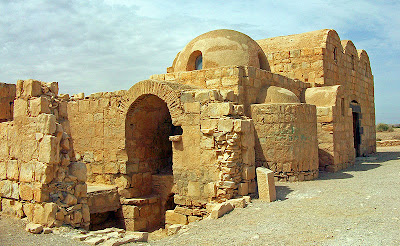
Qasr Amra in Zarqa Governorate, Jordan


Built in the early 8th century, this exceptionally well-preserved desert castle was both a fortress with a garrison and a residence of the Umayyad caliphs.

Um er-Rasas (Kastrom Mefa'a) in Madaba Governorate, Jordan


Most of this archaeological site, which started as a Roman military camp and grew to become a town from the 5th century, has not been excavated. It contains remains from the Roman, Byzantine and Early Muslim periods (end of 3rd to 9th centuries AD) and a fortified Roman military camp.

Wadi Rum Protected Area in Aqaba Governorate, Jordan


The 74,000-hectare property, inscribed as a mixed natural and cultural site, is situated in southern Jordan, near the border with Saudi Arabia. It features a varied desert landscape, as well as 25,000 rock carvings with 20,000 inscriptions trace the evolution of human thought and the early development of the alphabet.

Source: Wikipedia


UNESCO World Heritage Sites in Jerusalem, Israel (PHOTOS)

Jerusalem has been designated as a capital city both by Israel, as well as Palestine. It is the largest city in Israel. A holy city to three religions (Judaism, Christianity, and Islam), Jerusalem is one of the oldest cities in the world. The City of Gold, as it has come to be known in Hebrew, is a fascinatingly unique place where the first century rubs shoulders with the twenty-first century, each jostling for legitimacy and space, and where picturesque "old" neighborhoods nestle against glistening office towers and high-rise apartments. It is one of those places which has to be seen to be believed.

Here is a list of the UNESCO World Heritage Sites in Jerusalem:

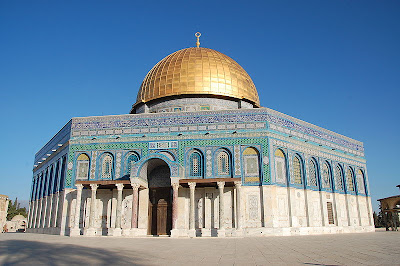
The Old City of Jerusalem and its Walls in Jerusalem, Israel


As a holy city for Judaism, Christianity and Islam, Jerusalem has always been of great symbolic importance. It is recognized by all three religions as the site of Abraham's sacrifice. The Wailing Wall delimits the quarters of the different religious communities, while the Resurrection rotunda in the Church of the Holy Sepulchre houses Christ's tomb.

Source: Wikipedia

UNESCO World Heritage Sites in Egypt (PHOTOS)

Egypt is in north-eastern Africa with its capital located in its largest city, Cairo. Egypt also extends into Asia by virtue of holding the Sinai Peninsula. Egypt is bordered by Israel and the Gaza Strip to the north-east, by Sudan to the south and by Libya to the west. The country is bounded by the Mediterranean and Red Seas (to the north and east respectively) and geographically dominated both by the Nile River and its fertile well-watered valley, and by the Eastern and Western deserts.

Egypt is perhaps best known as the home of the ancient Egyptian civilization, with its temples, hieroglyphs, mummies, and - visible above all - its pyramids. Less well-known is Egypt's medieval heritage, courtesy of Coptic Christianity and Islam - ancient churches, monasteries and mosques punctuate the Egyptian landscape. Egypt stimulates the imagination of western tourists like few other countries and is probably one of the most popular tourist destinations world-wide.

Here is a list of the UNESCO World Heritage Sites in Egypt:

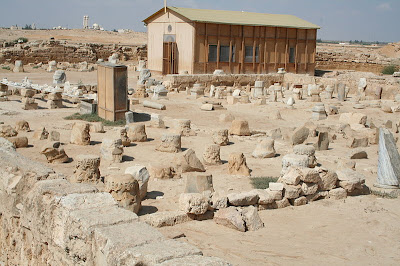
Abu Mena in Alexandria Governorate, Egypt


The church, baptistry, basilicas, public buildings, streets, monasteries, houses and workshops in this early Christian holy city were built over the tomb of the martyr Menas of Alexandria, who died in A.D. 296.

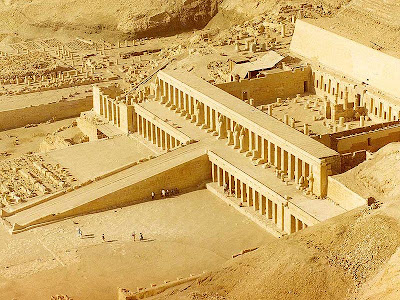
Ancient Thebes with its Necropolis in Luxor Governorate, Egypt


Thebes, the city of the god Amon, was the capital of Egypt during the period of the Middle and New Kingdoms.

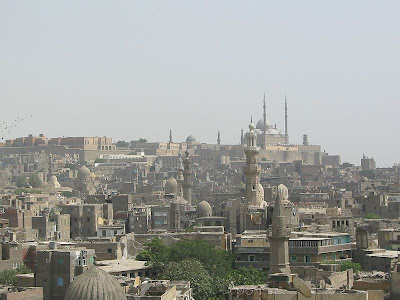
Historic Cairo in Cairo Governorate, Egypt


Tucked away amid the modern urban area of Cairo lies one of the world's oldest Islamic cities, with its famous mosques, madrasas, hammams and fountains. Founded in the 10th century, it became the new centre of the Islamic world, reaching its golden age in the 14th century.

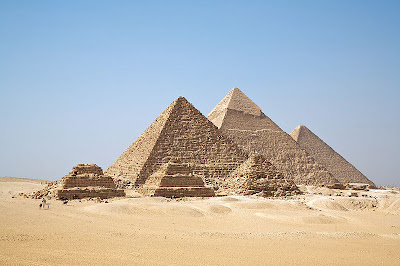
Memphis and its Necropolis – the Pyramid Fields from Giza to Dahshur in Giza Governorate, Egypt


The capital of the Old Kingdom of Egypt has some extraordinary funerary monuments, including rock tombs, ornate mastabas, temples and pyramids. In ancient times, the site was considered one of the Seven Wonders of the World.

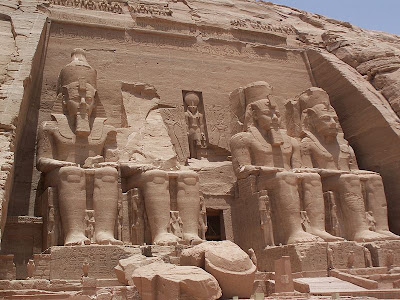
Nubian Monuments from Abu Simbel to Philae in Aswan Governorate, Egypt


This outstanding archaeological area contains such magnificent monuments as the Temples of Ramses II at Abu Simbel and the Sanctuary of Isis at Philae, which were saved from the rising waters of the Nile thanks to the International Campaign launched by UNESCO, in 1960 to 1980.

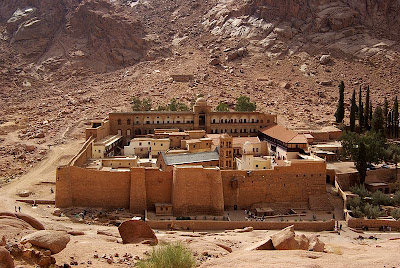
Saint Catherine Area in South Sinai Governorate, Egypt


The Orthodox Monastery of St Catherine stands at the foot of Mount Horeb where, the Old Testament records, Moses received the Tablets of the Law. The mountain is known and revered by Muslims as Jebel Musa. The entire area is sacred to three world religions: Christianity, Islam, and Judaism.

Wadi Al-Hitan (Whale Valley) in Faiyum Governorate, Egypt


Located in a desert, the site contains fossil remains of the now extinct Archaeoceti, a suborder of whales, showing the evolution of the whales from a land-based to an aquatic mammal.

Source: Wikipedia

UNESCO World Heritage Sites in Bahrain (PHOTOS)

The Kingdom of Bahrain is a Middle Eastern archipelago in the Persian Gulf, tucked into a pocket of the sea flanked by Saudi Arabia and Qatar. It's an oasis of social liberalism – or at least Western-friendly moderation – among the Muslim countries of the region. It's popular with travelers for its authentic "Arabness" but without the strict application of Islamic law upon its non-Muslim minority. Case in point: alcohol is legal here. Although it has a heavily petroleum-based economy, its more relaxed culture has also made it a social and shopping mecca (so to speak), which has helped it develop a fairly cosmopolitan middle class not found in neighboring countries with just a rich elite and subsistence-level masses.
Here is a list of the UNESCO World Heritage Sites in Bahrain:

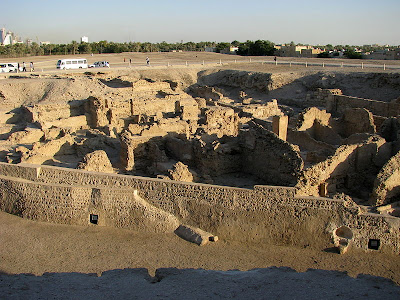
Qal'at al-Bahrain – Ancient Harbour and Capital of Dilmun in Northern Governorate, Bahrain

The site was the capital of the Dilmun, one of the most important ancient civilizations of the region. It contains the richest remains inventoried of this civilization, which was hitherto only known from written Sumerian references.

Source: Wikipedia

Friday, 14 September 2012

UNESCO World Heritage Sites in Algeria (PHOTOS)

Algeria is an Arab and Berber country in North Africa. It has a Mediterranean Sea coastline in the north. It is surrounded by Morocco to the northwest, Tunisia to the northeast, Libya to the east, Niger to the southeast, Mali to the southwest, Mauritania and Western Sahara to the west. After the secession of South Sudan from Sudan, Algeria became the largest country in Africa.

Here is a list of the UNESCO World Heritage Sites in Algeria:

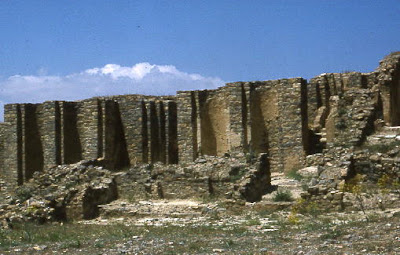
Al Qal'a of Beni Hammad in M'Sila Province, Algeria


In a mountainous site of extraordinary beauty, the ruins of the first capital of the Hammadid emirs, founded in 1007 and demolished in 1152, provide an authentic picture of a fortified Muslim city.

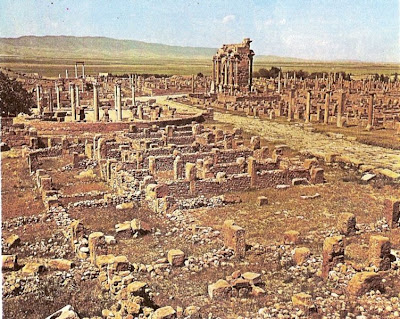
Djémila in Sétif Province, Algeria


Situated 900 m above sea-level, Djémila, or Cuicul, with its forum, temples, basilicas, triumphal arches and houses, is an interesting example of Roman town planning adapted to a mountain location.

Kasbah of Algiers in Algiers Province, Algeria


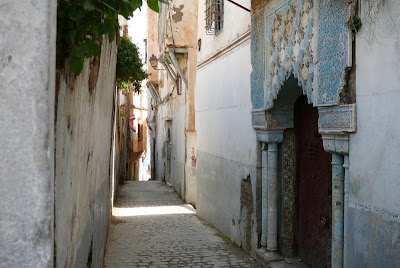
The Kasbah is a unique kind of medina, or Islamic city. It stands in one of the finest coastal sites on the Mediterranean, overlooking the islands where a Carthaginian trading-post was established in the 4th century BC.

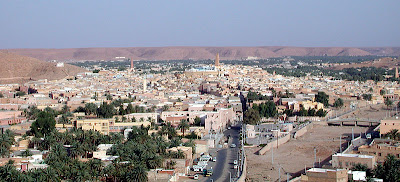
M'zab Valley in Ghardaïa Province, Algeria


A traditional human habitat, created in the 10th century by the Ibadites around their five ksour (fortified cities), has been preserved intact in the M’Zab valley.

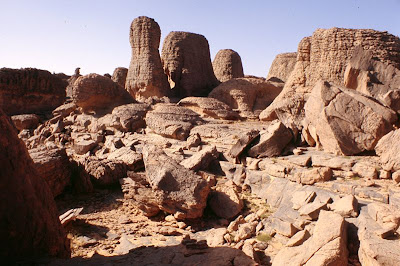
Tassili n'Ajjer in Illizi Province and Tamanrasset Province, Algeria


This site has one of the most important groupings of prehistoric cave art in the world. More than 15,000 drawings and engravings record the climatic changes, the animal migrations and the evolution of human life on the edge of the Sahara from 6000 BC to the first centuries of the present era.

Timgad in Batna Province, Algeria


Timgad lies on the northern slopes of the Aurès mountains and was created ex nihilo as a military colony by the Emperor Trajan in AD 100.

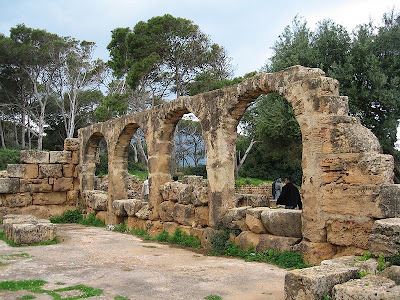
Tipaza in Tipaza Province, Algeria


Tipasa was an ancient Punic trading-post conquered by Rome and turned into a strategic base for the conquest of the kingdoms of Mauritania. It comprises a unique group of Phoenician, Roman, palaeochristian and Byzantine ruins alongside indigenous monuments such as the Kbor er Roumia, the great royal mausoleum of Mauritania.

Source: Wikipedia